
Sprains and strains are often confused, but they affect different parts of the body. A sprain involves a ligament, while a strain affects a muscle or tendon. Both are common injuries, especially among athletes, and understanding the difference can help guide your recovery.
At Ortho San Antonio, our orthopedic and sports medicine specialists help patients throughout San Antonio, Texas, diagnose and treat sprains, strains, and other musculoskeletal injuries.
Sprain vs. Strain: A Sports Medicine Physician Explains

Sprains and strains are two of the most common injuries Dr. Samantha Baginski-Prewitt, DO, sees as a sports medicine physician at Ortho SA. They involve two different areas of the body, and she explains the difference in simple terms:
"A sprain involves your ligaments, so for example, a very common sprain that we see is an ankle sprain. Whereas a strain involves your muscles, so that can involve a back strain, a calf strain, a hamstring strain, anything like that." - Dr. Samantha Baginski-Prewitt, DO
In other words, the first question is what tissue was hurt: the ligaments that stabilize a joint, or the muscles that move it. Let's break down what each injury looks like.
What Is a Sprain?
A sprain happens when a ligament is stretched or torn. Ligaments are the tough bands of tissue that connect bone to bone and keep your joints stable.
Sprains usually happen when a joint is forced past its normal range of motion, like rolling your ankle on uneven ground or landing awkwardly after a jump. The ankle sprain is the classic example, but sprains can also affect the knee, wrist, thumb, and other joints.
What Is a Strain?
A strain happens when a muscle (or the tendon that attaches it to bone) is overstretched or torn. You may know it as a "pulled muscle."
Strains can happen anywhere you have muscle. Common examples include a back strain, a calf strain, and a hamstring strain. They can come on suddenly during a sprint or a heavy lift, or build up over time from repetitive motion.
Sprain vs. Strain at a Glance

Because the symptoms overlap, it can be hard to tell the two apart on your own. If you are unsure, a sports medicine doctor can examine the area and confirm what is injured.
How Are Sprains and Strains Treated?
Here is the good news from Dr. Baginski-Prewitt: treatment for a sprain and a strain looks very similar. In most cases, care follows a few simple steps:
Rest and protect the area. Often that means immobilizing the injury (with a brace, boot, or wrap) to give it time to heal.
Use R.I.C.E. Rest, ice, compression, and elevation help calm pain and swelling in the early days.
Restore range of motion and mobility. Once symptoms settle, gentle movement and rehab bring motion back.
Progress back to play. Athletes build strength and function gradually before returning to their sport.
The goal is not just to feel better. It is to rebuild the joint or muscle so the injury does not come back.
How Long Does a Sprained Ankle Take to Heal?
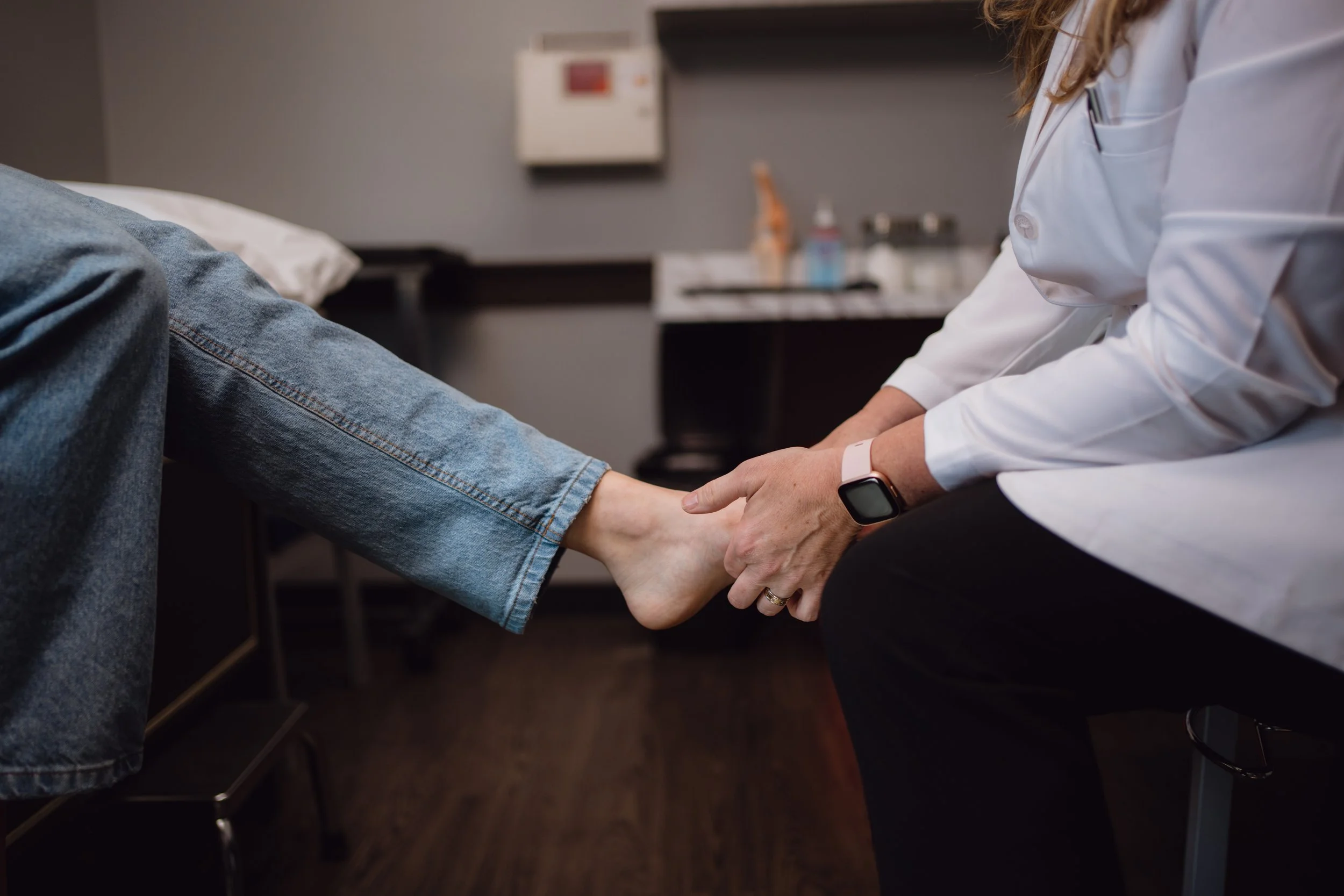
One of the most common questions patients ask is, "How long does a sprained ankle take to heal?" The answer depends largely on the severity of the injury.
Mild ankle sprains, which involve stretching of the ligament, often improve within one to two weeks. Moderate sprains, involving a partial ligament tear, may take several weeks to heal, while severe sprains, involving a complete tear, can require several months of recovery and more extensive treatment.
Recovery also depends on factors such as age, activity level, and rehabilitation. Returning to sports too early can increase the risk of reinjury and ongoing ankle instability, making proper recovery especially important.
How to Speed Up Muscle Strain Recovery
If you're wondering how to speed up muscle strain recovery, the key is allowing the injured muscle to heal while gradually restoring movement and strength.
Initial treatment often includes rest, ice, compression, and elevation (R.I.C.E.) to help manage pain and swelling. However, resting doesn't mean avoiding all movement. As symptoms improve, gentle, pain-free activity can help restore flexibility and range of motion without placing unnecessary stress on the injured muscle.
As recovery progresses, strengthening exercises and physical therapy can help rebuild muscle function and reduce the likelihood of reinjury. Returning to exercise or sports should be gradual, with an emphasis on regaining strength and mobility before resuming full activity.
Pushing through pain or returning to activity too soon can delay muscle strain recovery, making it important to follow a treatment plan appropriate for the severity of your injury.
When to See a Sports Medicine Doctor in San Antonio
While many mild sprains and strains improve with rest and home care, some injuries require professional evaluation. Knowing when to see a sports medicine doctor can help prevent further injury and support a safer recovery.
Consider scheduling an orthopedic evaluation if you experience:
Difficulty bearing weight: You cannot walk comfortably or put weight on the injured area.
Significant swelling or bruising: Swelling continues to worsen or does not improve with rest.
Joint instability: The affected joint feels weak, unstable, or gives way during movement.
A popping sensation: You heard or felt a pop when the injury occurred.
Persistent pain: Symptoms aren't improving after several days of home care.
Limited mobility: You have difficulty bending, straightening, or moving the injured area normally.
At Ortho San Antonio, our sports medicine specialists can assess the severity of your injury, determine whether imaging is needed, and recommend a personalized treatment plan to help you return to your normal activities safely.

Helping San Antonio Athletes Stay Healthy and Active
Whether an athlete is dealing with a football injury, knee or shoulder pain, an overuse injury, or concerns about safely returning to sports, having access to experienced sports medicine in San Antonio can help athletes stay active while protecting their long-term health.
At Ortho San Antonio, our sports medicine team works with athletes of different ages and competition levels to evaluate injuries, develop personalized treatment plans, and help patients safely return to the activities they enjoy.
For families searching for sports doctors in San Antonio or a sports medicine orthopedic surgeon near you, Ortho San Antonio provides comprehensive orthopedic and sports medicine care for athletes across the San Antonio area.