
Medically reviewed by Kathren McCarty, DPM, board-certified podiatric foot and ankle surgeon at Ortho San Antonio. Last reviewed November 2026.
The best injection for ankle pain depends on what is causing it. Steroid (cortisone) injections calm inflammation and can ease pain within days, which makes them a common first choice for ankle arthritis, tendonitis, and bursitis. Platelet-rich plasma (PRP) injections use your own blood to support healing in tendons and ligaments, with results that build more slowly.
If ankle pain is keeping you from walking, working or staying active, an injection may help you get moving again. Below, Dr. Kathren McCarty, a podiatrist in San Antonio, explains how each injection works, who it helps and how it fits into a complete ankle pain treatment plan.
A San Antonio Podiatrist Explains Ankle Injections
In this short video, Dr. McCarty walks through the two injections Ortho San Antonio uses most for foot and ankle pain: steroid injections and PRP.
-
Dr. Kathren McCarty, DPM, Ortho San Antonio: One of the modalities we utilize in the clinic is joint injections. Steroid injections typically contain a corticosteroid that we inject the painful joint or soft tissue with. It helps reduce the inflammation and helps reduce the pain, and while it may not permanently be a cure, by reducing the pain, it helps our mobility and our function, and it helps us get more active. And it also is diagnostic. It allows us to see where we're most affected by the pain and the injury. And so steroids are something that are very helpful, and once we can reduce the pain, sometimes we'll alter our biomechanics and our kinetic chain and help avoid compensating so we don't aggravate that injury further. Another injection we employ in the clinic is platelet rich plasma. And platelet rich plasma is where we draw the patient's own blood and we get concentrated platelets, and we inject that back into the painful, injured area, and that has growth factors that help regenerative and reparative processes to help the injury heal.
How does a steroid injection help ankle pain?
A steroid injection reduces inflammation inside a painful joint or soft tissue, which lowers pain and makes it easier to move.
"It helps reduce the inflammation and helps reduce the pain, and while it may not permanently be a cure, by reducing the pain, it helps our mobility and our function, and it helps us get more active." Dr. Kathren McCarty, DPM
Can an ankle injection help find the source of pain?
Yes. When pain eases after an injection in one specific spot, it helps confirm where the problem starts.
"It also is diagnostic. It allows us to see where we're most affected by the pain and the injury." Dr. Kathren McCarty, DPM
How does PRP help an ankle injury heal?
PRP concentrates the platelets in your own blood and places them right where the injury is.
"We draw the patient's own blood and we get concentrated platelets, and we inject that back into the painful, injured area, and that has growth factors that help regenerative and reparative processes to help the injury heal." Dr. Kathren McCarty, DPM

Common Causes of Ankle Pain That Injections Can Treat
Injections work best when the source of pain is clear. Your podiatrist may recommend one for:
Ankle arthritis. Worn cartilage causes stiffness, swelling and aching, especially in the morning or after activity. Learn more in What Is Ankle Arthritis? [link: confirm slug]
Tendonitis. Irritated tendons around the ankle, including the Achilles, peroneal and posterior tibial tendons, often respond to calming the inflammation.
Lingering sprains and ligament injuries. Some sprains keep hurting long after the swelling goes down. Not sure what you have? Read Is My Ankle Sprained or Broken? [link: confirm slug]
Bursitis and soft tissue pain. Small fluid-filled sacs and tissues around the ankle can become inflamed from overuse or shoe pressure.
Steroid (Cortisone) Injections for Ankle Pain
A steroid injection, often called a cortisone shot, delivers a corticosteroid directly into the painful joint or soft tissue. It is one of the most common joint injections in San Antonio for fast relief.
How it helps you
Reduces inflammation and pain, often within a few days
Makes it easier to walk, exercise and do physical therapy
Helps your podiatrist confirm where your pain is coming from
What to expect. The injection takes a few minutes in the clinic. Some people notice soreness for a day or two, and a few have a brief flare of pain before relief sets in. Relief can last from several weeks to a few months.
Good to know. A steroid injection is not usually a permanent cure. Because repeated steroid injections can weaken tendons and cartilage, doctors space them out and limit how many you receive in the same area.
Platelet-Rich Plasma (PRP) Injections for the Ankle
A PRP injection uses your body's own healing tools. Your provider draws a small amount of your blood, spins it in a centrifuge to concentrate the platelets, and injects that platelet-rich plasma into the injured tendon, ligament or joint.
How it helps you
Delivers growth factors that support your body's natural repair process
Uses your own blood, so allergic reactions are rare
May help tendon and ligament injuries that have been slow to heal
What to expect. Soreness for a few days is common. Because PRP supports healing rather than simply calming inflammation, improvement usually builds over several weeks. Ortho San Antonio uses established PRP systems, and you can compare PRP with other biologic options in Platelet-Rich Plasma vs. Stem Cell Injections for Joint Pain.
Steroid vs. PRP Injection: Which Is Right for Your Ankle?
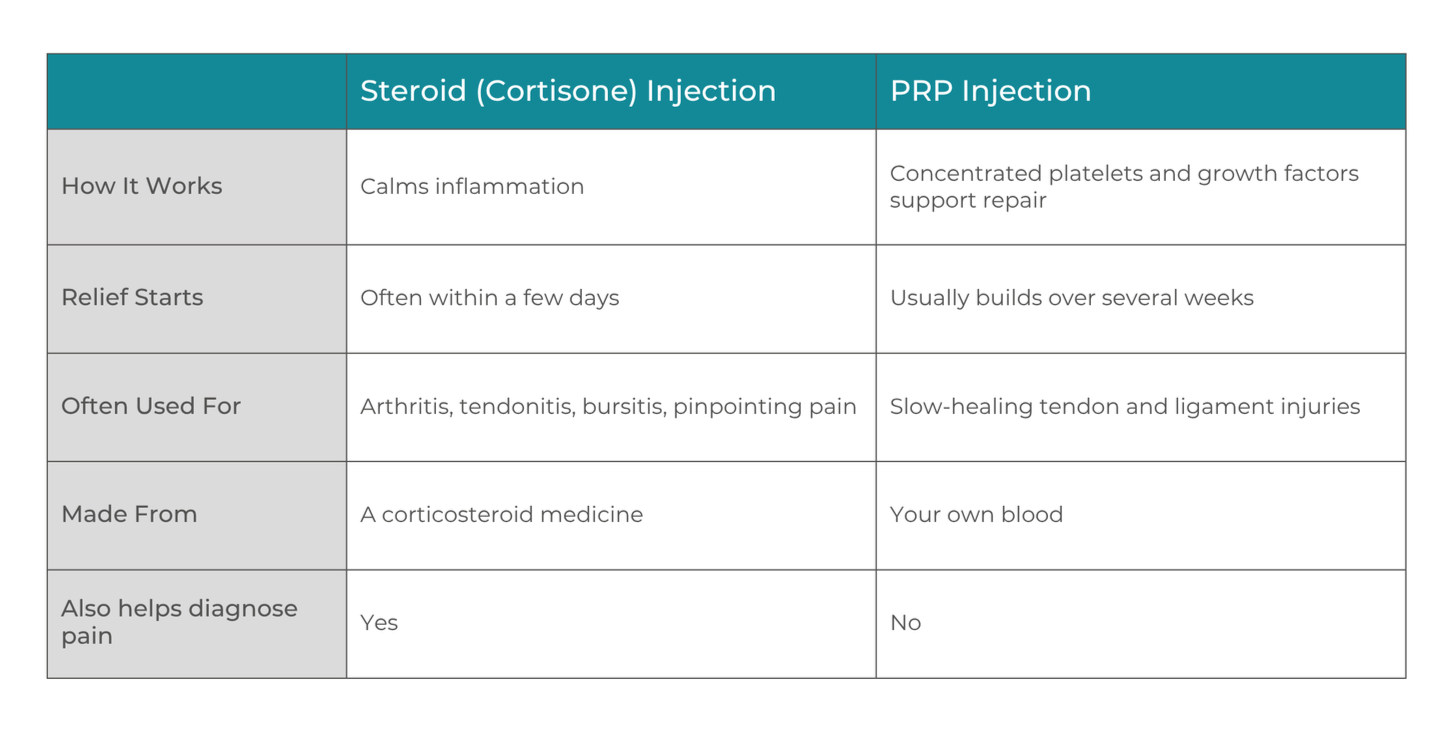
The right choice depends on your diagnosis, how long you have had pain and your activity goals. Dr. McCarty will walk you through the options at your visit.
Why Injections Work Best as Part of a Plan
An injection opens a window. With less pain, you can move normally again instead of limping or shifting weight to protect the ankle. That matters, because compensating can strain your knee, hip or the other foot.
"Once we can reduce the pain, sometimes we'll alter our biomechanics and our kinetic chain and help avoid compensating so we don't aggravate that injury further." Dr. Kathren McCarty, DPM
To make relief last, your plan may also include physical therapy, supportive shoes or custom orthotics, bracing, and activity changes.
When Ankle Injections Are Not Enough
Dr. McCarty exhausts conservative treatment before she considers surgery. When pain keeps returning or the ankle is unstable, a podiatric foot and ankle surgeon can discuss options such as ankle arthroscopy, Achilles tendon repair, foot and ankle fracture care or reconstruction. Many of these procedures use minimally invasive techniques.
Key Takeaways
The best injection for ankle pain depends on the cause, so an accurate diagnosis comes first.
Steroid injections offer faster relief from inflammation and can help pinpoint the source of pain.
PRP injections use your own blood to support healing, with results that build over time.
Injections work best alongside therapy, footwear and bracing that correct the underlying problem.
If injections stop helping, a foot and ankle surgeon can review next steps.
Frequently Asked Questions About Ankle Pain Injections
-
It depends on what is causing your pain. A steroid (cortisone) injection is often used first for fast relief of inflammation from arthritis, tendonitis or bursitis. PRP may be considered for tendon or ligament injuries that are slow to heal. A podiatrist matches the injection to your diagnosis.
-
Relief varies from person to person. Many patients feel better within a few days, and relief can last from several weeks to a few months. A steroid injection is usually not a permanent cure, so it works best alongside physical therapy, supportive shoes or bracing.
-
They do different jobs. A steroid injection calms inflammation to reduce pain quickly. PRP uses concentrated platelets from your own blood, and their growth factors support your body's repair process, so results usually build more slowly. Your podiatrist recommends one based on your injury and goals.
-
Your provider draws a small amount of your blood, spins it in a centrifuge to concentrate the platelets, and injects that platelet-rich plasma into the injured area. Because PRP comes from your own blood, allergic reactions are rare. Soreness for a few days afterward is common.
-
Most patients feel a quick pinch and some pressure. Soreness for a day or two afterward is common, and a small number of people have a short flare of pain after a steroid injection. Ice and rest usually help, and your provider will explain what to expect.
-
Yes. If your pain improves after an injection into a specific joint or tendon area, it helps confirm that spot is the main source. That information guides your next steps, including whether physical therapy, bracing or surgery makes the most sense for you.
-
Doctors limit how often steroids go into the same area, because repeated injections can weaken tendons and cartilage over time. Injections are usually spaced at least a few months apart. If you need them often, it is a good time to talk about other treatment options.
-
See a podiatrist if ankle pain lasts more than a week or two, keeps coming back, causes swelling or a wobbly feeling, or makes walking hard. Ortho San Antonio's foot and ankle team sees patients in San Antonio, Boerne, Castroville and Schertz.

See a Podiatrist in San Antonio for Ankle Pain
You do not have to keep working around ankle pain. Dr. Kathren McCarty and our foot and ankle specialists in San Antonio will find the cause of your pain and build a plan around your goals, whether that starts with an injection, therapy, or another option.